


Leak detectors for refrigerants
Leak checks are mandatory above certain charge sizes, and with flammable refrigerants leak detection is a safety question on top. What matters is sensitivity, sensor type and approval for your refrigerant.
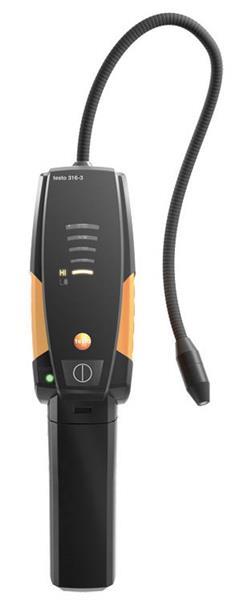
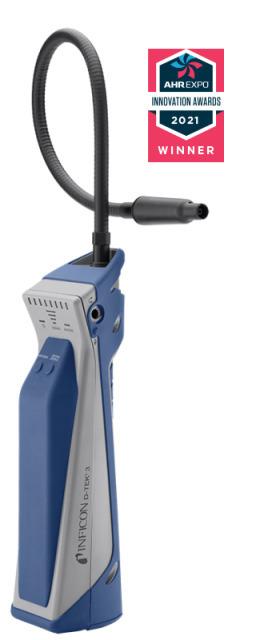
3 units compared
All leak detectors in the range (32 items)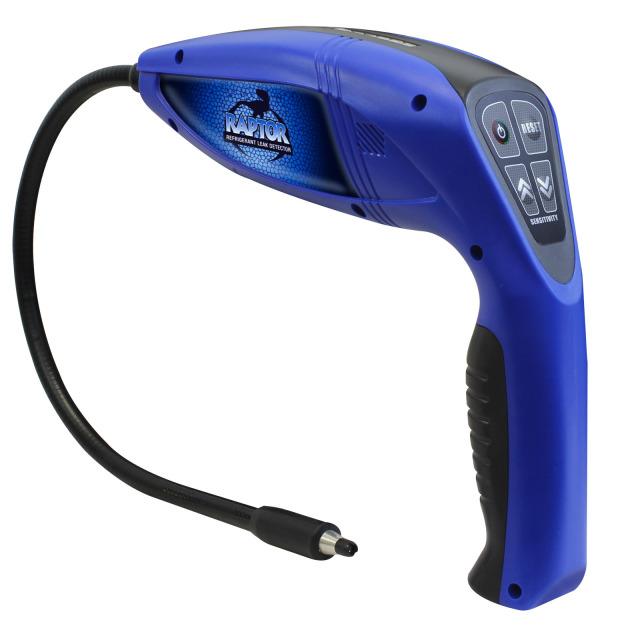
What matters when choosing
- Approval for flammable refrigerants For A2L and A3 the manufacturer has to approve the instrument explicitly. An instrument without that statement does not belong in your hand on an R32 or R290 system.
- Adjustable sensitivity The finer the response threshold, the smaller the leaks you find. Very sensitive instruments also respond to traces in the ambient air, so adjustable sensitivity is more useful in practice than the lowest catalogue figure.
- The sensor as a wear part The sensor ages and eventually has to be replaced. Check before buying whether replacement sensors are available and what they cost. That determines running costs more than the purchase price does.
- Probe and handling On indoor units and in ducts, a flexible probe of sufficient length reaches places that are otherwise inaccessible.
- Complementary methods The electronic search finds the point; foaming agents and UV methods confirm it. For the record what counts is the finding, not the method.
Refrigerant and safety group
Frequently asked questions
When is a leak check mandatory?
Under the EU F-gas Regulation (EU) 2024/573 from a charge of 5 tonnes CO₂ equivalent, and from 10 tonnes for hermetically sealed systems. The intervals are staged: from 5 t annually, from 50 t every six months, from 500 t quarterly. An automatic leak detection system doubles the interval and is required from 500 t. The check has to be documented.
Do I need a separate leak detector for R32?
You need an instrument with explicit approval for A2L refrigerants. Whether your existing one has it is stated in the operating manual.
Why does my leak detector respond everywhere?
Usually the sensitivity is set too high, or there is still refrigerant in the ambient air. Ventilate, turn the sensitivity down and close in on the point from coarse to fine.
Is leak detection spray enough?
To confirm a suspected point, yes; to find small leaks, no. The usual approach combines the electronic search with a foaming agent.