


Vacuum pump for air conditioning systems
Once the system is installed it has to be evacuated: air and moisture must come out before refrigerant goes in. Moisture left in the circuit forms acids and blocks the expansion device. Which pump fits depends on system size, line length and refrigerant.
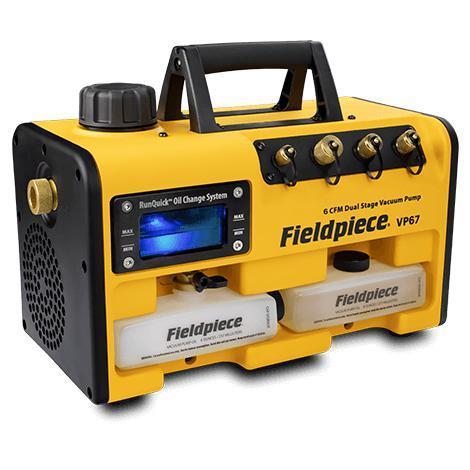
3 units compared
All vacuum pumps in the range (80 items)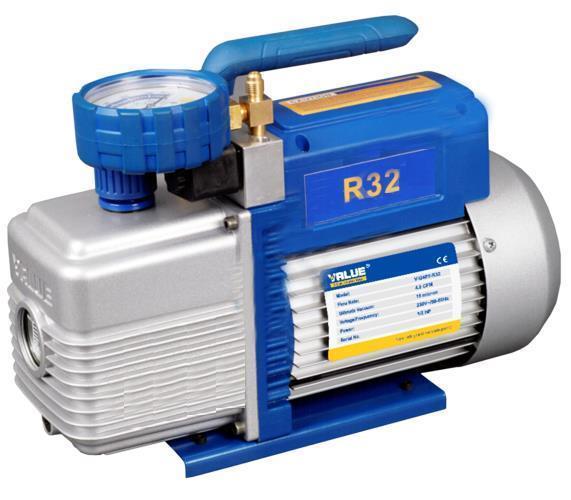
What matters when choosing
- Displacement to match the system For split and multi-split systems in ordinary residential and commercial use, 60–100 l/min is enough. On large systems, long line runs or several indoor units in sequence, 170 l/min and above noticeably shortens the wait.
- Single or two-stage Two-stage pumps reach a deeper ultimate vacuum and hold it even when the system has been open for a while. Single-stage units also reach the usual target values, but need more time and less moisture in the circuit. If you install regularly, two-stage is the calmer choice.
- Gas ballast valve If the pump draws damp air, water condenses in the oil and ruins the ultimate vacuum. Gas ballast lets that moisture out during operation. On systems that stood open for some time the valve is close to indispensable.
- Non-return valve at the intake If the power fails, or the pump is switched off without isolating it first, oil is pushed back into the system. An integrated non-return valve prevents that.
- Oil change in the field Vacuum pump oil binds moisture and is spent after demanding jobs. A large filler opening, a sight glass and a drain plug you can actually reach on site decide whether the change really gets done.
- Weight and handle Between 60 l/min and 170 l/min there are often several kilos. If you carry the pump up ladders and onto roofs every day, weight belongs in the decision.
Refrigerant and safety group
Frequently asked questions
How long do I have to evacuate an air conditioning system?
Not by the clock, by the reading. Evacuate until the vacuum gauge reaches the value required by the system manufacturer; below 500 microns is common. Then isolate the pump and watch: if the reading stays stable for a few minutes, the system is dry and tight. If it rises, there is either moisture left or a leak.
Is the manifold gauge enough to check the vacuum?
No. A manifold scale does not resolve fine vacuum. In practice it only shows that there is some negative pressure at all. For proof you need an electronic vacuum gauge reading in microns.
Which vacuum pump for R290?
For propane systems, suitability around flammable refrigerants counts alongside capacity. Look for an explicit manufacturer statement on use with A3 refrigerants, and consider the working environment. Ventilation and distance from possible ignition sources are part of the assessment.
When does the vacuum pump oil need changing?
Whenever the pump has drawn appreciable moisture, and at the latest when the oil turns cloudy or the ultimate vacuum is no longer reached. With daily use the change is due correspondingly often. When a pump "no longer pulls", look at the oil before suspecting the machine.