


Refrigerant scales
Charging or recovering: the quantity has to be right and it has to be provable. For the choice, what counts is capacity, resolution and how well the instrument survives daily life in a vehicle.
3 units compared
All refrigerant scales in the range (36 items)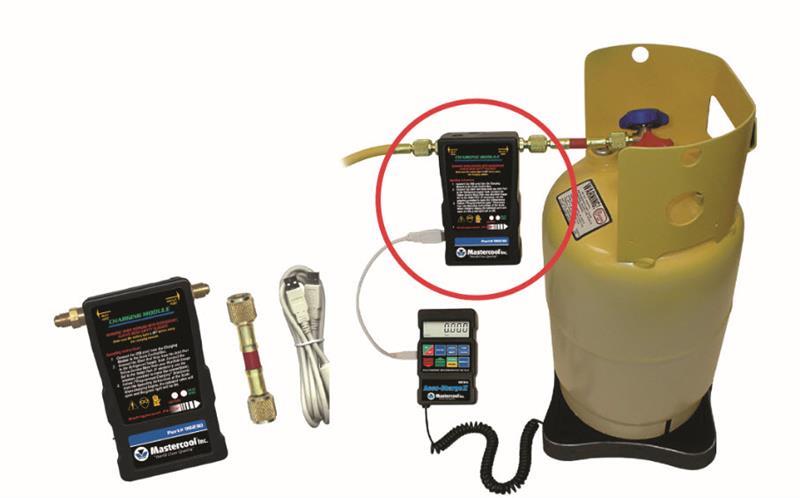
What matters when choosing
- Capacity and platform The scale has to carry cylinder and contents, and the cylinder has to stand on it safely. For large recovery cylinders a sufficiently wide platform matters more than the last digit of accuracy.
- Resolution Charging small split systems is a matter of a few hundred grams. A scale that only displays in coarse steps turns topping up into guesswork.
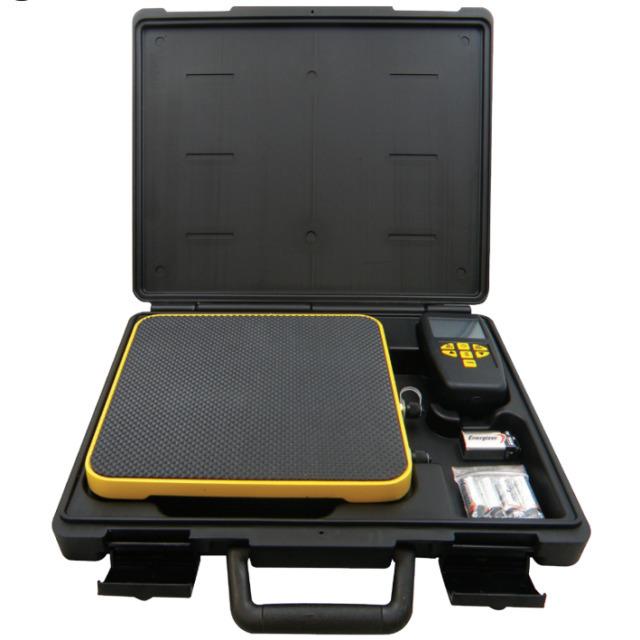
- Display and operation Tare, unit switching and a display that stays readable in sunlight. Wired displays are robust, wireless ones more convenient.
- Robustness in the vehicle Scales live in a case and in an estate car. A sturdy housing and a protected cable decide service life more than any extra function.
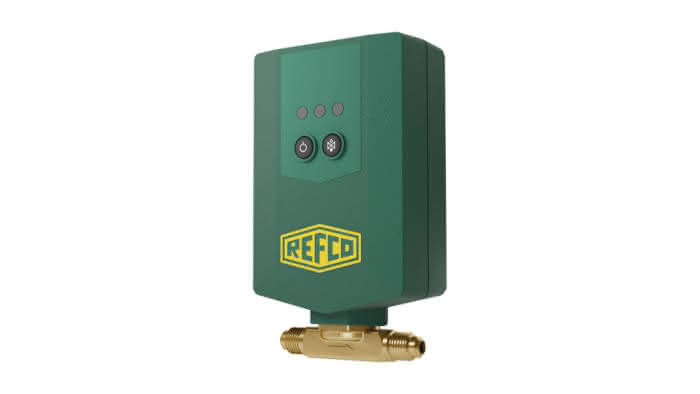
- Automatic charge control Some scales control the charge themselves via a solenoid valve. For series work that saves time; for occasional use it is additional set-up.
Refrigerant and safety group
Frequently asked questions
Why do I need a scale for documentation?
Because the quantity charged and the quantity recovered have to be documented. Without weighing, the quantity is estimated, and an estimated quantity cannot be evidenced.
What capacity do I need?
It has to carry cylinder and contents. For the usual 12.5-litre cylinders considerably less is needed than for a 61-litre cylinder, which can weigh over 60 kg when full. When in doubt, the larger scale.
Does a refrigerant scale have to be verified?
For internal record keeping a non-verifiable scale is normally used. As soon as the quantity is invoiced to third parties, weights-and-measures law can apply. Clarify that for your own case.