


Refrigerant recovery machines
Before decommissioning, conversion or repair, the refrigerant has to be recovered and the quantity documented. Two things decide the choice of unit: approval for the refrigerant in question, and a suitable collecting cylinder.
3 units compared
All recovery machines in the range (42 items)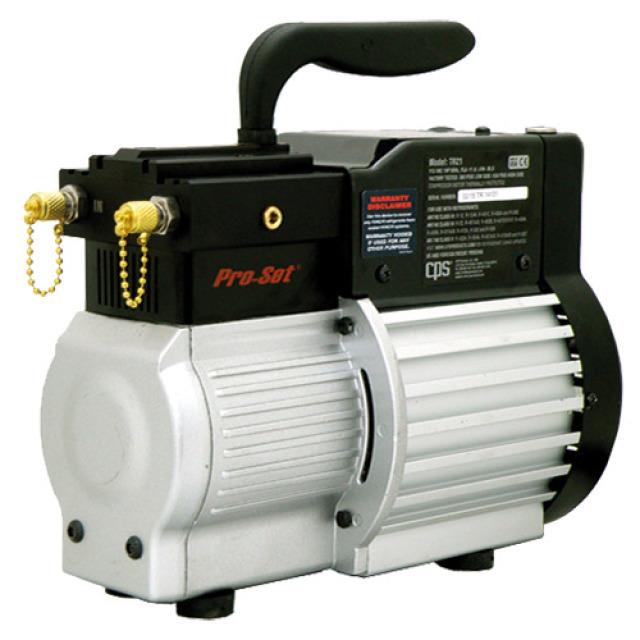
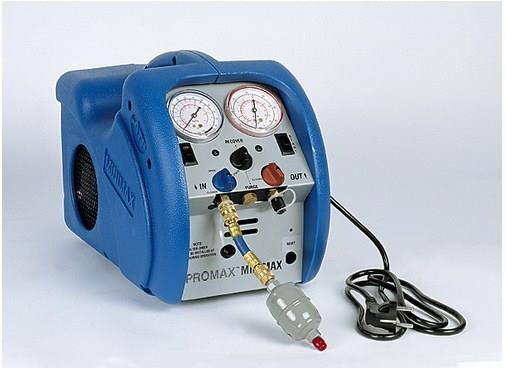
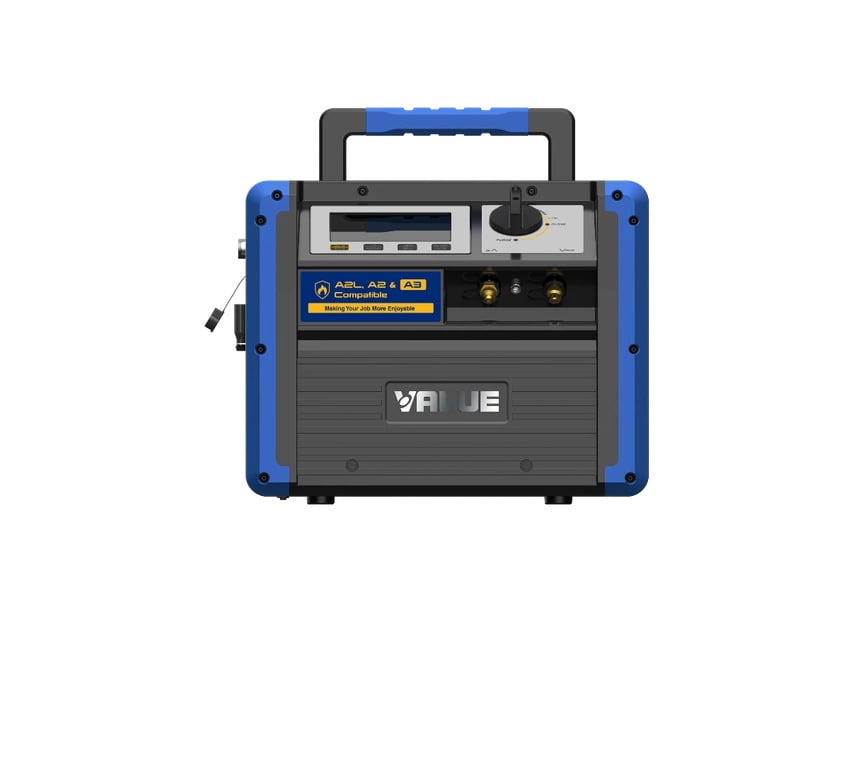
What matters when choosing
- Approval for the refrigerant By far the most important criterion. A unit without explicit approval for A2L or A3 may not be used on such systems, regardless of whether it would technically "work".
- Oil-free running Oil-free units carry no compressor oil into the recovered refrigerant and need markedly less maintenance. For everyday service that is the more practical design.
- Recovery rate The rate decides how long you stand at the system. On small split units that is a side issue; with larger charges it quickly becomes half the working time.
- A matching cylinder Recovered refrigerant belongs in an approved recovery cylinder with enough remaining capacity, not in a disposable cylinder. Cylinder, valves and connections should match the unit rather than be assembled from whatever is to hand.
- A matching refrigerant scale The recovered quantity has to be documented. Without a refrigerant scale that cannot be evidenced, which is why the two are usually bought together.
Refrigerant and safety group
Frequently asked questions
What does the EU F-gas Regulation require when recovering?
Work on the refrigerant circuit requires certification of competence. Refrigerant must be recovered before decommissioning or dismantling; releasing it to atmosphere is not permitted. The recovered quantity has to be documented, which is why the scale belongs with the unit. National implementing rules apply in addition, so check what governs at your place of work.
Do I need a separate recovery unit for R32?
You need a unit with explicit approval for A2L refrigerants. Whether your existing unit carries that is stated in the operating manual. A unit approved only for A1 may not be used on an R32 system.
Can I charge recovered refrigerant back in?
Only if purity and condition allow it. In practice that happens within the same system after a repair rather than across systems. Where contamination, oil mixing or acid is suspected, the refrigerant belongs in reclamation, not back in the circuit.